BASIS Opens First-Round Applications for Cashback Card Paid in the Asset Spent
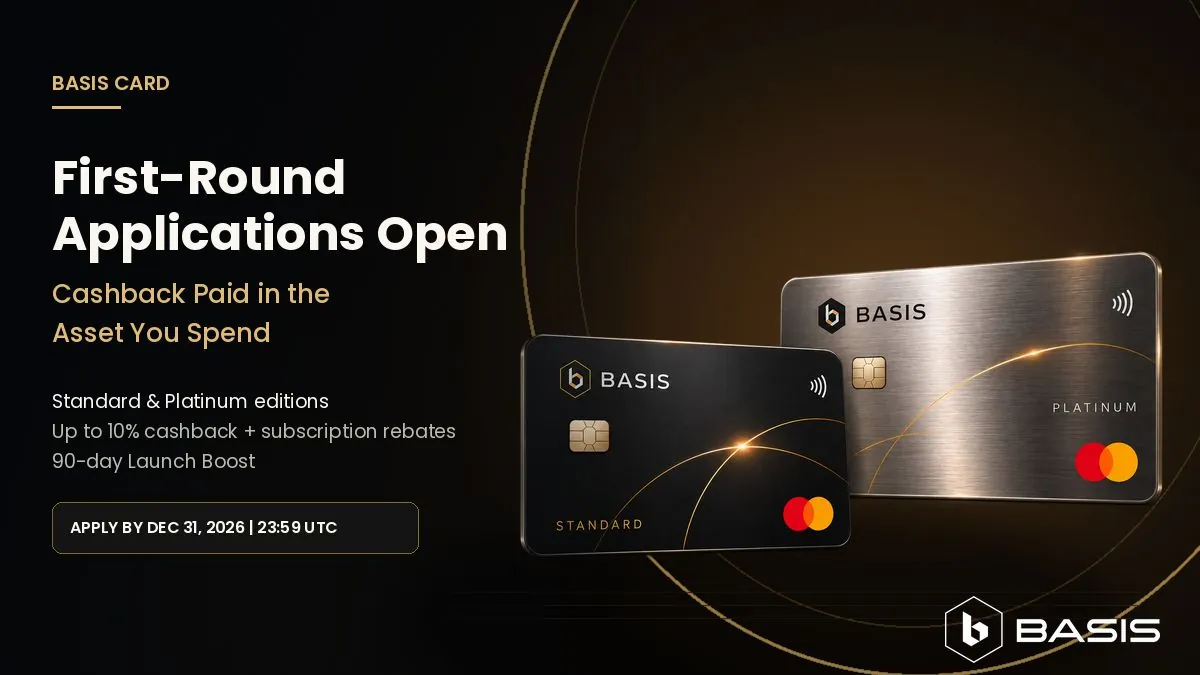
BASIS Digital Infrastructure Ltd opened first-round applications for its BASIS Card, which credits cashback in the same asset used for each purchase. Standard and Platinum editions are available, with Platinum cardholders earning up to 10% during the three-month Launch Boost period, and applications close December 31, 2026.
Written by CoinArticle’s AI Newsroom · from 2 cited sources. How we work
Application Terms and Deadline
BASIS Digital Infrastructure Ltd opened first-round applications for the BASIS Card, a payment card that returns cashback in the asset used for each eligible purchase. Applications are submitted at basis.pro/card and close on December 31, 2026, at 23:59 UTC. Applications are free and limited to one per account during Round 01, and applicants must hold at least USD 1,000 in eligible BASIS wallet value at submission.
Both sources report the same application window and submission channel. Final issuance remains subject to review by the issuing partner.
Two Editions and Staking Eligibility
The card is offered in two editions. Standard is finished in matte black composite, and Platinum is made of metal. Applicants choose their preferred edition when submitting, and qualification depends on an active staking position measured against a separate threshold for each tier. BASIS checks the position at submission and again when the application period closes.
The sources describe the eligibility mechanism identically. Neither publishes the threshold figures in the text provided to CoinArticle, so readers should confirm the exact staking requirement for each edition on the application page.
Cashback Mechanics
The central feature is that cashback is denominated in the asset spent. A purchase made in Bitcoin returns Bitcoin, and a purchase made in Ethereum returns Ethereum, with no reward points or proprietary platform token involved. Cashback on eligible settled purchases is credited to the cardholder's Funding Wallet.
Cashback does not automatically join an existing staking position. Cardholders who want to stake rewards must do so separately under the platform's ordinary conversion rules. Submitting a card application leaves existing staking positions, lock-up periods, Dynamic Reward Rates, boosters and stToken balances unchanged.
Launch Boost and Benefit Tiers
Both editions include a three-month Launch Boost period that starts on the issuance date, during which cardholders receive enhanced cashback rates, higher monthly reward caps and additional subscription benefits. Platinum cardholders qualify for cashback of up to 10% during this window. After Launch Boost, each card reverts to its base benefits. Standard and Platinum carry rate-lock periods of 12 and 24 months respectively, subject to program terms.
The benefit package also includes subscription rebates of 50% or 100% depending on edition and period across more than 80 subscriptions, two annual airport lounge visits, a 3 GB eSIM and one additional card, subject to tier eligibility. Standard cardholders pay a 2% FX fee, while Platinum cardholders pay none during Launch Boost. Both editions provide immediate access to a virtual card on activation, and Platinum adds priority and dedicated support. All monetary figures are in USD, and physical card fees include shipping.
Where the Coverage Differs
The two sources are substantively identical in their facts, figures and attribution. The only differences are wording choices, such as whether the Launch Boost period "begins" or "begins on the date" of issuance, and minor phrasing around how the Opening of applications is described. No conflicting numbers appear between them, so no disagreement needs to be flagged on figures.
Context for the Card Program
BASIS presents the launch as an extension of its existing digital asset infrastructure into everyday payments. The company's staking-linked eligibility model means access to the card is tied to holdings on its platform rather than to a standalone card purchase. Readers evaluating the program should weigh the staking requirement and the rate-lock terms alongside the headline cashback rate.
Why It Matters
For Traders
Cashback paid in BTC or ETH means card spending can return those assets, though the staking eligibility requirement may affect who can access the program.
For Investors
A card that returns spending in native crypto ties everyday payments to holdings, a model worth tracking as a potential adoption channel for digital assets.
For Builders
Paying cashback in the spent asset requires per-asset settlement and crediting logic, so teams building card or rewards rails should review how the BASIS model handles multiple denominations.
This article is for information only and is not financial advice. Read the full disclaimer.