Bitcoin Rebounds to $78,000 After Democratic Midterm Sweep
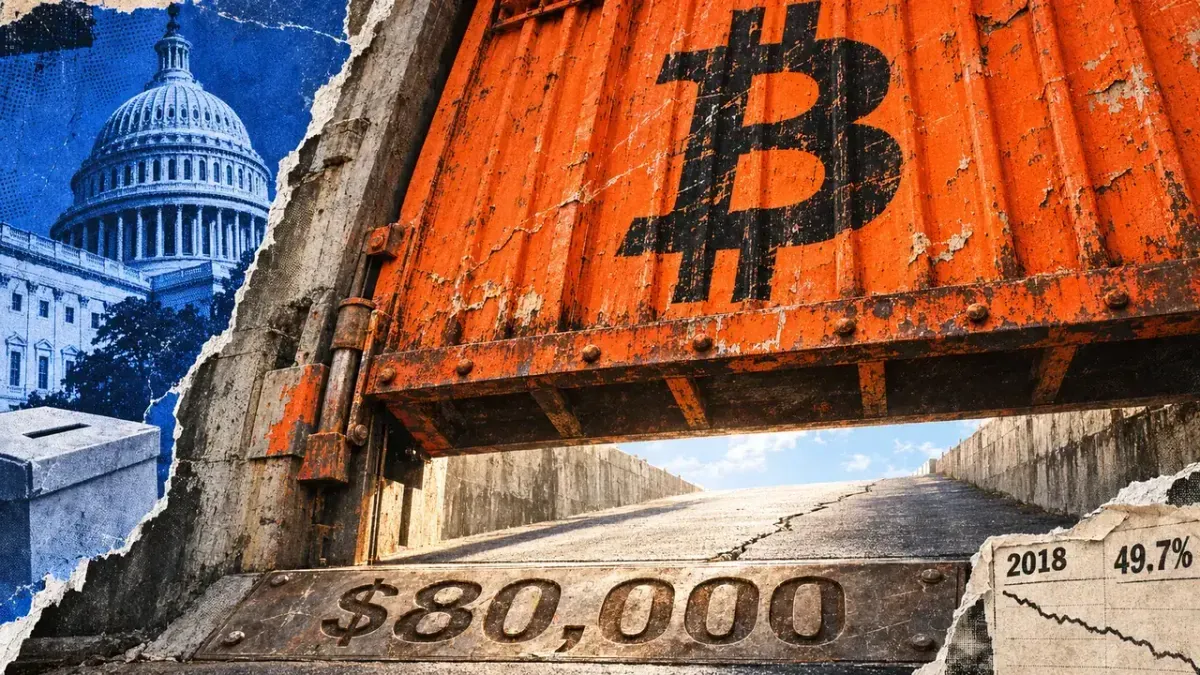
Bitcoin recovered above $78,000 on November 4 after falling toward $75,600 during the US midterm results, which gave Democrats control of both chambers of Congress. Analysts say the outcome was largely priced in and that macro conditions, fund flows and Federal Reserve policy will shape the next move more than the political shift.
Written by CoinArticle’s AI Newsroom · from 2 cited sources. How we work
Recovery After the Election Selloff
Bitcoin recovered to approximately $78,300 on November 4, according to crypto.news price data, after briefly falling toward $75,600 while the midterm results were coming in. Bitcoinist reported that the broader crypto market rebounded on Wednesday after overnight losses, and that Bitcoin briefly touched a six-week high during the recovery. The two outlets describe the same direction of move but do not agree on the exact intraday range, so the figures above should be read as approximate.
Democrats secured control of both the House of Representatives and the Senate, which leaves President Donald Trump working with an opposition-controlled Congress for the remainder of his term. Both reports tie the market's initial pressure to concern that this could slow crypto-friendly legislation.
Analysts Look Past Washington
James Butterfill, Head of Research at CoinShares, told crypto.news that Bitcoin had largely priced in a Democratic sweep before the results were confirmed. "My sense is that Bitcoin had largely priced in a Democratic sweep, leaving room for a relief rally as uncertainty clears," he said.
The analysts quoted by crypto.news argue that Bitcoin's next direction will depend more on macroeconomic conditions, institutional fund flows and Federal Reserve monetary policy than on the political change in Washington. Butterfill's view was that the expected result did not necessarily mean another selloff was imminent.
Volatility and Prediction Markets
Talos data cited by crypto.news showed that Bitcoin's DVOL index, which measures implied volatility in the options market, fell 6%, while the Cboe Volatility Index (VIX) declined 10%. Kelly Ye, Head of Research at Talos, said prediction markets priced the outcome within hours, even though contract settlement will take longer. According to Talos, prices on Kalshi and Polymarket's non-US platform converged quickly, although the two platforms use different settlement procedures.
Decentralized Derivatives Moved First
Talos reported that Hyperliquid's perpetual futures tracking the Nasdaq 100 and S&P 500 reversed their election-night losses after reaching lows between 9 pm and 10 pm ET. The QQQ and SPY proxies recovered roughly 3.0 and 2.2 points from those lows and finished the overnight session positive. Corresponding cash ETFs could not respond in the same way because regular trading was closed, with premarket activity starting at 4 am ET.
Overnight trading volume was heavily concentrated in perpetual futures. Talos said Hyperliquid's XYZ100 and SP500 perpetuals recorded a combined $848 million in volume, against about $10.5 million across all tokenized spot venues, roughly 81 times higher. XYZ100 traded at about 5.4 times its typical hourly volume and SP500 at about 6.3 times its usual level.
The analysts' comments and Talos's data are consistent with each other, but the recovery narrative rests on a single data provider for the derivatives figures.
Why It Matters
For Traders
Implied volatility fell sharply after the results, so option premiums may be cheaper than during the election-night spike, while overnight perpetual volume shows where price discovery happened first.
For Investors
Analysts argue the legislative outlook is secondary to Fed policy and fund flows, so the midterm result is unlikely to set Bitcoin's multi-month trajectory on its own.
For Builders
Overnight perpetual futures volume dwarfing tokenized spot volume shows demand for 24-hour traditional-asset exposure is concentrating in derivatives rather than tokenized equities.
This article is for information only and is not financial advice. Read the full disclaimer.