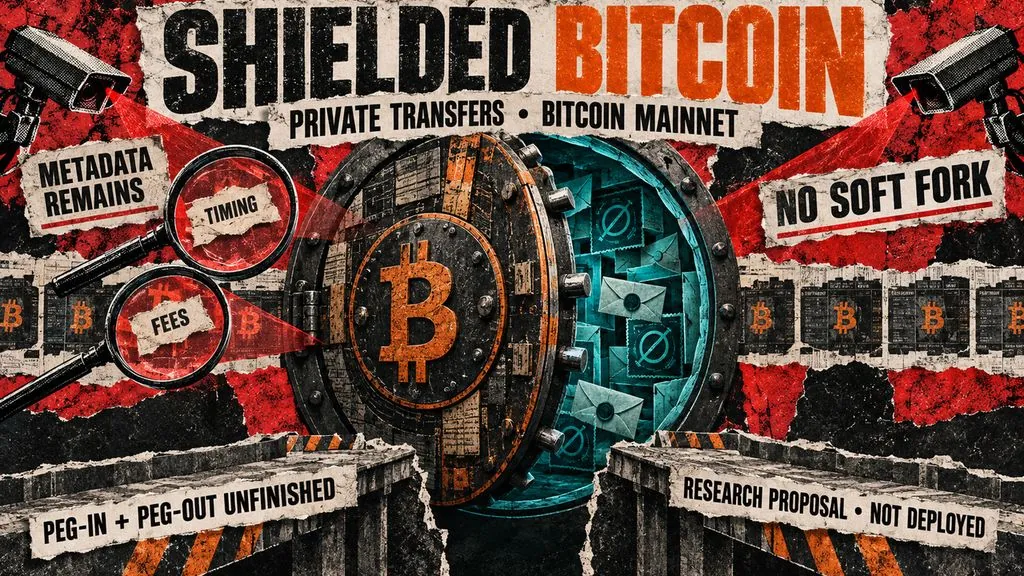
Bitcoin Researchers Propose Shielded Transfers Without Soft Fork
Researchers from init have published a proposal for Shielded Bitcoin, a metaprotocol that enables private transfers on the Bitcoin network using zero-knowledge proofs and encrypted notes. The system conceals transaction amounts, participants, and links between transfers without requiring consensus changes or a soft fork.
Written by CoinArticle’s AI Newsroom · from 2 cited sources. How we work
The Shielded Bitcoin Proposal
Researchers Clara Shikhelman, Mikhail Komarov, and Aleksei Moskvin published a paper on September 24 introducing Shielded Bitcoin, a metaprotocol layer that enables private transactions directly on the Bitcoin network. The system uses zero-knowledge proofs and encrypted notes to conceal transaction amounts, sender and recipient identities, and the links between individual transfers.
How It Avoids Consensus Changes
Shielded Bitcoin operates as a metaprotocol, meaning it functions outside the base layer without requiring a soft fork or modifications to Bitcoin's consensus rules. By working at a protocol layer above the blockchain, the proposal sidesteps the governance friction and technical risk associated with changing Bitcoin's core functionality. This approach mirrors design patterns used in other Bitcoin privacy solutions but applies cryptographic techniques more commonly associated with privacy coins like Zcash.
Technical Mechanism
The protocol relies on zero-knowledge proofs to validate transactions privately and encrypted note structures to obscure transaction details. Users can transfer value while proving the transaction is valid without revealing amounts, counterparties, or transaction history to external observers. The metaprotocol design allows users to opt into privacy without forcing all participants to adopt it.
Why It Matters
For Traders
No immediate price or market mechanic; privacy features remain academic research rather than deployed code on mainnet.
For Investors
A viable privacy layer that requires no consensus change could reduce pressure for controversial Bitcoin forks and signal expanding privacy-preserving infrastructure.
For Builders
Metaprotocol privacy patterns enable opt-in privacy without hard-fork risk, establishing a template for layered feature deployment on Bitcoin.
This article is for information only and is not financial advice. Read the full disclaimer.