CFTC Chairman Says Onchain Venues Like Hyperliquid Can Enter US Via Registration or Partnership
CFTC Chairman Michael Selig said onchain derivatives platforms such as Hyperliquid can serve US users by registering with the agency or partnering with registered firms, with no special rules for decentralized venues. Backpack's approvals this month were cited as a template for the path.
Written by CoinArticle’s AI Newsroom · from 2 cited sources. How we work
What the Chairman Said
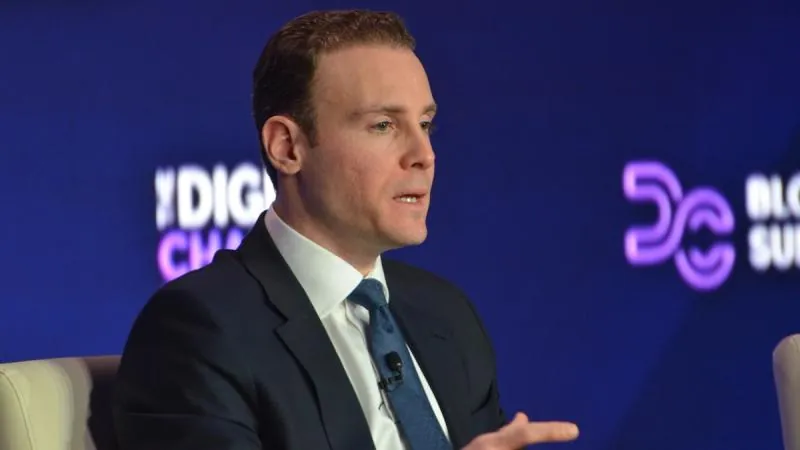
CFTC Chairman Michael Selig said on November 19, 2026, that onchain derivatives platforms seeking to serve US retail traders have two routes: register with the agency directly, or partner with firms that already hold registrations. Speaking at The Hill and The Block's Capitol Crypto Forum, he named Hyperliquid, the decentralized perpetual futures platform that currently restricts access for US users.
CoinDesk summarized the position in similar terms, reporting that Hyperliquid and other onchain exchanges can offer derivatives to US traders if they obtain the required licenses or work with a registered exchange. Crypto Briefing's account adds that Selig framed the principle as one of equal treatment: blockchain execution is acceptable, but the legal obligations must match those of traditional exchanges. Both outlets report the same core position, and neither describes a separate exemption or carve-out for decentralized venues.
The Two Routes and Their Requirements
The first route is full registration as a designated contract market (DCM), which is the regulated venue where futures trade, and as a derivatives clearing organization (DCO), the clearinghouse that guarantees settlement between counterparties. The second route is collaboration, in which an onchain platform works with an exchange that already holds those registrations while still using a blockchain to execute and settle trades.
In either case, customer-facing operations must run through approved futures commission merchants (FCMs), the regulated brokers that hold customer accounts and funds. Selig also stressed anti-money laundering controls. Decentralization, he indicated, does not remove the obligation to know who customers are.
Backpack as the Reference Case
Selig cited Backpack, a crypto-native firm, as an example of the path in practice. According to Crypto Briefing, Backpack received DCO registration on November 13, 2026, obtained DCM designation on November 16, and secured National Futures Association approval as an FCM earlier that same week. Those three approvals together cover the exchange, clearinghouse and broker functions. Neither source independently verified the sequence beyond the dates reported, and CoinDesk's coverage did not detail Backpack's approvals.
Scope and Open Questions
The comments follow a broader CFTC posture under Selig of extending existing authority to offshore derivatives activity rather than waiting for new legislation. Crypto Briefing also reported that the agency recently clarified that single-stock perpetual futures can be offered on registered exchanges, a notable shift given that perpetuals are the product that made venues like Hyperliquid popular.
Nothing in the reporting indicates that Hyperliquid has applied for registration or entered a partnership. Crypto Briefing describes the remarks as a potential route, not an announced plan, and CoinDesk's framing is similarly conditional. The practical choice for any platform is between building compliance infrastructure in-house, as Backpack did, and keeping its onchain engine while outsourcing regulated functions to a licensee. Neither outlet reported timelines or cost estimates for either path.
Source Discrepancy
The two sources differ in emphasis rather than in substance. CoinDesk frames the story as the absence of special rules for onchain trading platforms. Crypto Briefing frames it as an open door with conditions. Both describe the same two routes, and neither reports a conflicting figure.
Why It Matters
For Traders
Traders on offshore perpetual venues should note that a US-facing route now exists, though no timeline or access change has been announced for any specific platform.
For Investors
A regulator signaling a registration path for onchain derivatives suggests a more durable compliance framework for the sector than enforcement-led uncertainty would.
For Builders
Protocols serving US users must choose between in-house DCM, DCO and FCM infrastructure or partnering with a licensee, and that choice shapes their architecture and go-to-market timing.
This article is for information only and is not financial advice. Read the full disclaimer.