Backpack Gains CFTC Approval to Offer Crypto Perpetual Futures in the US
Backpack has received CFTC approval to operate a futures exchange, clearinghouse and futures commission merchant, allowing it to offer leveraged crypto perpetual futures to US customers. The company plans to route its global order flow through the US-regulated venue, though sources differ on how much of its activity will move and on the timing of the approvals.
Written by CoinArticle’s AI Newsroom · from 2 cited sources. How we work
What Was Approved
The Commodity Futures Trading Commission designated TLD Markets, Backpack's exchange subsidiary, as a designated contract market on November 16, according to CryptoSlate. Crypto Briefing reports that the approvals came in three steps: TLD Clearing, Inc. was cleared as a derivatives clearing organization on November 13, TLD Markets followed on November 16, and the National Futures Association approved the company as a futures commission merchant on November 18.
Together, these licenses cover the three functions a regulated derivatives business needs: the venue where trades are matched, the clearinghouse that guarantees settlement, and the broker that holds customer accounts and funds. The two outlets agree on the exchange designation date but describe the sequence somewhat differently, with CryptoSlate emphasizing the clearinghouse approval as coming three days before the exchange designation and Crypto Briefing placing the FCM approval last.
Why Perpetual Futures Matter Here
Perpetual futures are contracts with no expiry date, letting traders hold leveraged positions for as long as they maintain sufficient margin. They are among the most heavily traded crypto products, but they have largely been offered by offshore exchanges that US customers cannot officially access. The approvals would give Backpack a legal basis to offer leveraged perpetuals to American traders.
Backpack's stated aim goes further than a US product launch. According to CryptoSlate, the company wants to consolidate its global business under the single US-regulated venue, quoting CEO Armani Ferrante as saying "Our entire platform will be operating on our CFTC regulated venue." CryptoSlate reports that Backpack would bring eligible American and international traders into a shared order book, which would give US users access to overseas order flow on their listed contracts.
Where the Sources Diverge
The two reports differ on how far the consolidation plan extends. CryptoSlate describes it as a full move of the company's worldwide trading onto the CFTC-regulated platform. Crypto Briefing frames the approvals as a US derivatives launch built on the existing licenses Backpack holds in Dubai under VARA and in the European Union under MiCA and MiFID II, and does not describe a global consolidation. Neither outlet confirms how much of Backpack's roughly $450 billion in cumulative trading volume, or its customer base across more than 150 countries, will migrate to the US venue.
CryptoSlate also notes that Backpack's US page still shows a waitlist, and that launch contracts, overseas order flow and execution quality remain unconfirmed. The reports do not agree on whether the platform is already accepting US customers.
Regulatory and Market Context
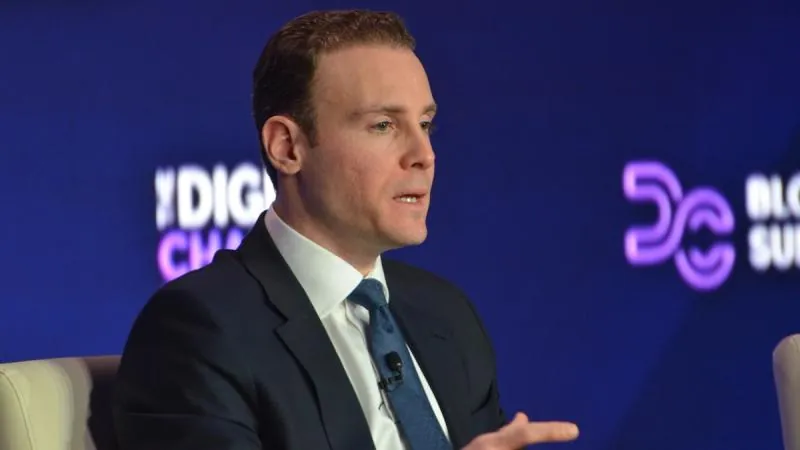
CFTC Chairman Michael Selig called the approvals historic and described Backpack as the first blockchain-based derivatives venue licensed by the agency, per Crypto Briefing. CryptoSlate reports that Backpack President Mark Wetjen said the initiative could help shift "price discovery from offshore unregulated venues to the United States." Both characterizations come from the company or its regulator and have not been independently assessed.
The planned feature set includes round-the-clock trading, fiat and crypto collateral, and cross-margining, which allows eligible positions to share collateral. Backpack's stated goal is to strengthen onshore price discovery and reduce reliance on offshore venues for US-linked derivatives trading.
As of publication, the sources do not report a launch date for US customer trading on the platform.
Why It Matters
For Traders
If the platform goes live for US customers, the shared order book could narrow spreads on Bitcoin and other perpetuals, but no launch date or contract list has been confirmed yet.
For Investors
A licensed US path for leveraged crypto perpetuals could shift liquidity and price discovery onshore over time, though the scale of migration from offshore venues is still unknown.
For Builders
Developers integrating perpetuals should track the CFTC-regulated DCM and DCO structure, since US access would require onboarding through a registered FCM rather than offshore APIs.
This article is for information only and is not financial advice. Read the full disclaimer.