CLARITY Act Heads to Senate Banking Markup as Democratic Votes Decide Its Path
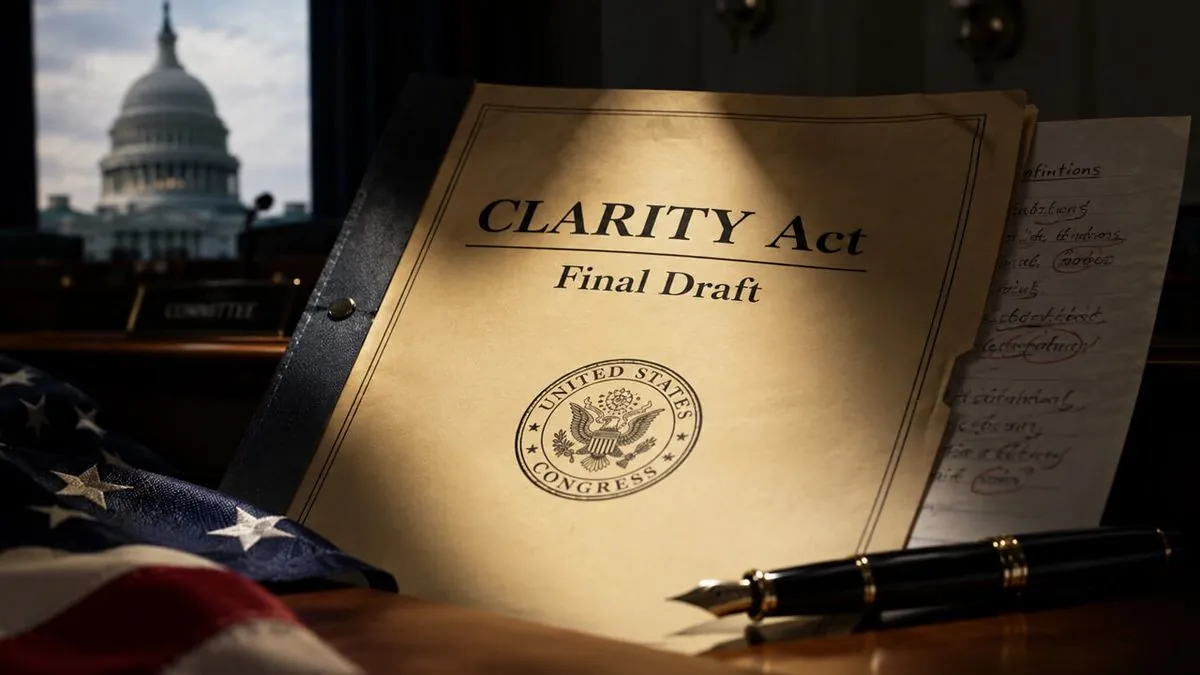
The Senate Banking Committee will mark up the CLARITY Act on May 14, after stalled talks over stablecoin rewards, anti-money laundering rules and ethics provisions. Committee sources and Galaxy Research point to a small group of Democrats whose votes will determine whether the bill can win bipartisan support beyond committee.
Written by CoinArticle’s AI Newsroom · from 2 cited sources. How we work
What Is Scheduled
The Senate Banking Committee will mark up the CLARITY Act on May 14, according to CryptoSlate, which described the session as the next step after months of stalled negotiations. The Defiant reported the same markup date, framing it as a test for the crypto market structure bill, while noting that banks have raised objections ahead of the vote.
The markup follows delays caused by disputes over stablecoin rewards, anti-money laundering safeguards and ethics provisions. Those disagreements have shifted the focus from whether Republicans can pass the bill out of committee to whether it can attract Democratic support that would carry it into the full Senate.
The Committee Math
Republicans hold 13 of the committee's 24 seats, so the bill has a plausible path out of committee on a party-line vote. CryptoSlate and Galaxy Research both emphasize that such a result would not be enough. A mostly partisan vote would leave the measure exposed to the same resistance that has slowed earlier crypto bills, and it would weaken its prospects on the Senate floor, where most major legislation needs 60 votes.
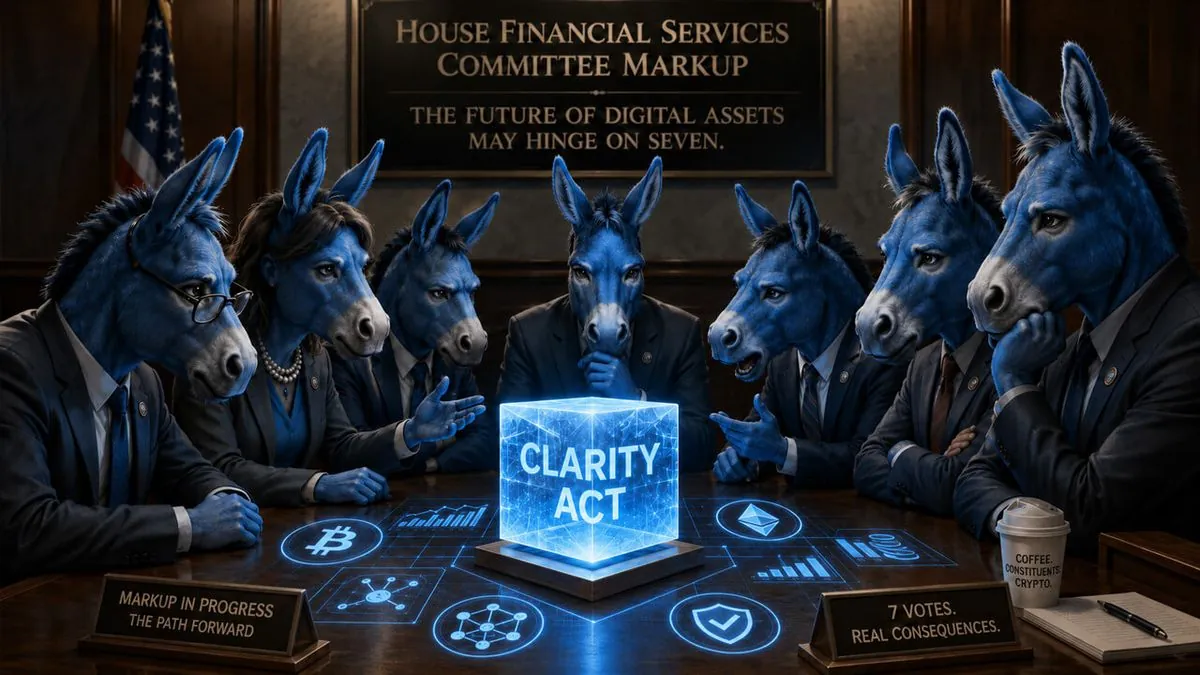
Seven Democrats in Focus
Galaxy Research has identified seven Democratic members as the key votes: Ruben Gallego of Arizona, Angela Alsobrooks of Maryland, Mark Warner of Virginia, Catherine Cortez Masto of Nevada, Andy Kim of New Jersey, Raphael Warnock of Georgia and Lisa Blunt Rochester of Delaware. Galaxy classifies Gallego and Alsobrooks as constructive, Warner, Cortez Masto, Kim and Warnock as conditional dealmakers, and Blunt Rochester as a swing vote.
Gallego is the top Democrat on the digital-assets subcommittee, and his support would give the bill a Democratic policy anchor. Alsobrooks helped negotiate compromise language on stablecoin rewards, one of the provisions that had slowed the bill.
The conditional group's votes are tied to safeguards on illicit finance, sanctions evasion, national security and consumer protection. Those members have backed crypto legislation before, including the GENIUS Act, which leaves room for late negotiations over enforcement language. Blunt Rochester supported earlier procedural steps on stablecoin legislation but opposed the final GENIUS Act, so her vote will depend on the final CLARITY text.
Opposition and Bank Concerns
CryptoSlate identifies four Democrats on the committee as unlikely supporters: Elizabeth Warren of Massachusetts, Jack Reed of Rhode Island, Tina Smith of Minnesota and Chris Van Hollen of Maryland. They are expected to argue that the bill still favors the industry too heavily. The Defiant's headline points to banking-sector pushback as a further obstacle, though the excerpt available for this report does not detail the specific objections.
What Comes Next
If the bill clears Senate Banking, it still faces a harder route through the full Senate, where it needs a broader bipartisan coalition to reach 60 votes. It would also need to be aligned with other Senate digital-asset work and reconciled with the House version before reaching the president. CryptoSlate notes reports that the Trump administration is also involved in the process, though the available text cuts off before those details.
Why It Matters
For Traders
A markup vote that splits along party lines could weigh on sentiment in crypto-linked equities and tokens in the days after May 14, so watch the Democratic votes closely.
For Investors
Whether the bill draws several Democrats determines if the US moves toward a federal market-structure framework or leaves crypto rules fragmented for another cycle.
For Builders
Compromise language on stablecoin rewards and AML safeguards may set the compliance requirements that protocols and issuers need to design around.
This article is for information only and is not financial advice. Read the full disclaimer.