Coldcard Postmortem Blames Weak Seed Generation for Bitcoin Thefts, Not Device Hacks
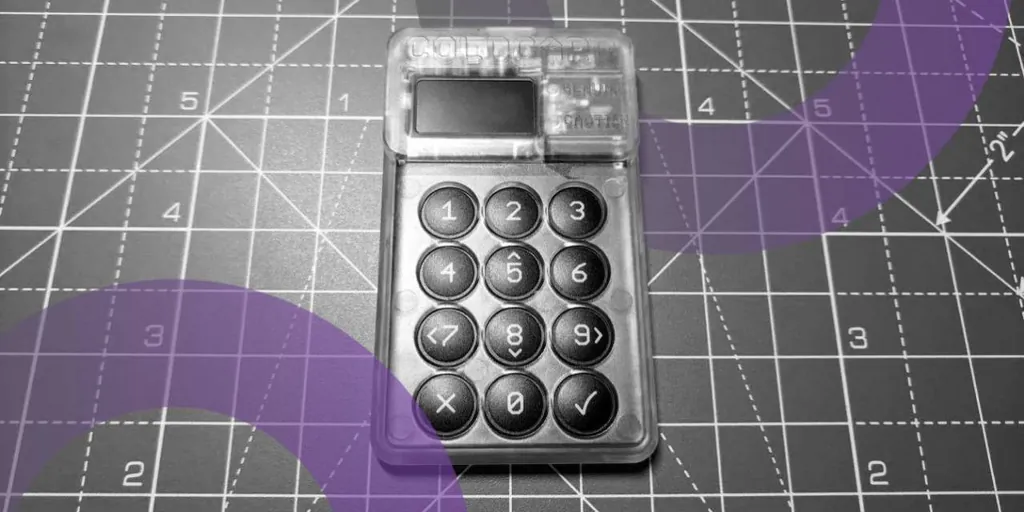
Coinkite published an 18-page postmortem attributing thefts of roughly 1,779 BTC to a firmware flaw that produced weak wallet seeds, not compromised hardware. The company says the defect went undetected through at least 15 independent reviews and that affected seeds must be replaced.
Written by CoinArticle’s AI Newsroom · from 2 cited sources. How we work
Root Cause: A Silent Fallback in Seed Generation
Coinkite's postmortem says the losses came from weak seeds rather than hacked devices. Coldcard firmware was meant to draw seed randomness from the hardware random number generator in its STM32 chip, but a firmware setting disabled that source, and a safeguard in the libNgU code library failed to catch it. Seed generation fell back to Yasmarang, a predictable software generator built into MicroPython, and the devices kept producing normal-looking seed words.
Coinkite estimates affected seeds carried roughly 40 bits of effective security on the older Mk2 and Mk3 models and about 72 bits on the Mk4, Mk5 and Q, against an intended 128 bits. That reduced search space is small enough for an attacker to regenerate private keys offline. The defect shipped in firmware from March 29, 2021, through July 30, 2026, according to the report.
Why Reviews Missed It
The report says at least 15 independent review efforts between 2021 and 2026 failed to find the flaw, including two paid third-party audits, physical-security work by Ledger Donjon, and an AI-assisted firmware review this year that produced 85 candidate findings. Coinkite's account is that each check answered a adjacent question: release checks confirmed the hardware generator code was present but not that seed generation reached it, and statistical tests could not distinguish the defective output from properly seeded output.
Scale of Losses: Two Sets of Figures
The two reports differ in how they count losses. Coinkite says it received about 300 loss-related support tickets tied to 242 customer accounts, roughly 0.21% of its estimated Coldcard user base. Its blog post cites 236 accounts. Because Coldcard is self-custodial, the company can only count losses customers report, and it says the true figure is likely higher.
Galaxy Research, as cited in the postmortem, counts 1,778.84 BTC stolen from more than 8,600 addresses, worth about $107 million at current prices. Galaxy had put losses above $115 million in August, based on prices at the time the coins moved. Decrypt cautions that these figures measure different things and should not be combined into a single victim total. White hat actors later moved some exposed coins into a recovery trust.
Attribution and the AI Question
The identity of whoever found and exploited the flaw is unknown, and law enforcement is investigating. The first unexpected transactions began July 29, two days after the full model weights of the Kimi K3 AI model were released. The report calls AI-assisted discovery "a plausible hypothesis, not an attribution." Decrypt also reports that the Bitcoin Red Team used Kimi K3 in a 108-hour multi-model sweep that flagged nearly 8,000 candidate findings across 501 Bitcoin projects, which Decrypt presents as evidence of how AI has changed the economics of vulnerability discovery.
Remediation and What Users Must Do
Coinkite says it identified the defect July 30 after users reported thefts and shipped fixed firmware for all supported release tracks on July 31. Newer firmware requires users to add their own entropy through key presses, dice rolls or coin flips, mixes it with three hardware sources, and checks at startup that seed generation reaches the hardware generator. An independent review by Keylabs, published October 15, found the defect "fully closed" in Mk5 firmware 5.6.2 and 5.6.3 and Q firmware 1.5.2Q and 1.5.3Q. That review did not cover Coldcard's Edge preview releases.
A firmware update does not repair seeds created on affected firmware. Coinkite told owners to install verified fixed firmware, create a new seed and move their coins. Seeds generated with at least 50 private dice rolls were not weakened. Coinkite also urged whoever holds the stolen bitcoin to return it.
Why It Matters
For Traders
Holders of Coldcard-generated seeds from affected firmware face ongoing theft exposure, and the scale of stolen BTC is large enough to watch for further on-chain movements from exposed addresses.
For Investors
The incident shows how a single entropy failure in hardware wallet firmware can persist for years, which raises the due-diligence bar for self-custody hardware providers.
For Builders
Any wallet or signing stack relying on MicroPython or software PRNG fallbacks should verify that hardware entropy actually reaches seed generation, not merely that the code exists.
This article is for information only and is not financial advice. Read the full disclaimer.