Kalshi Ends Donald Trump Jr. Advisory Role After 1789 Capital Backs Polymarket
Kalshi has ended Donald Trump Jr.'s advisory contract after his venture firm 1789 Capital increased its investment in rival prediction market Polymarket, with both companies describing the split as mutual. The departure comes as prediction markets face court fights over federal versus state jurisdiction and heightened congressional scrutiny.
Written by CoinArticle’s AI Newsroom · from 2 cited sources. How we work
What Happened
Kalshi has ended Donald Trump Jr.'s advisory role, the prediction market operator told Reuters on Thursday, citing 1789 Capital's investment in competitor Polymarket. A Kalshi spokesperson said the decision was mutual and described it as following the firm's "significant investment in a competitor this past summer." Talks to end the arrangement began in August, when 1789 Capital led Polymarket's latest funding round.
Trump Jr. joined Kalshi as a strategic adviser in January 2025. The Financial Times reported at the time that his equity stake was worth about $300,000. The departure report did not say what happens to that equity. Neither Polymarket nor Trump Jr. responded to Reuters' requests for comment.
Size of the Polymarket Commitment
The sources differ on how to describe the Polymarket financing. Crypto Briefing, citing Reuters, frames Kalshi as a $40 billion operator and says 1789 Capital led the round. Crypto.news reports that 1789 Capital agreed in September to contribute about $300 million toward a round targeting $1 billion at a $21 billion valuation, up from close to $15 billion, and that its combined commitments would reach roughly $500 million with an earlier $200 million investment. Crypto.news notes these figures describe a planned financing, not a documented final ownership stake, so the firm's exact percentage in Polymarket is not public.
Trump Jr. is a partner at 1789 Capital and joined Polymarket's advisory board in August 2025, after the firm's initial investment.
Regulatory Backdrop
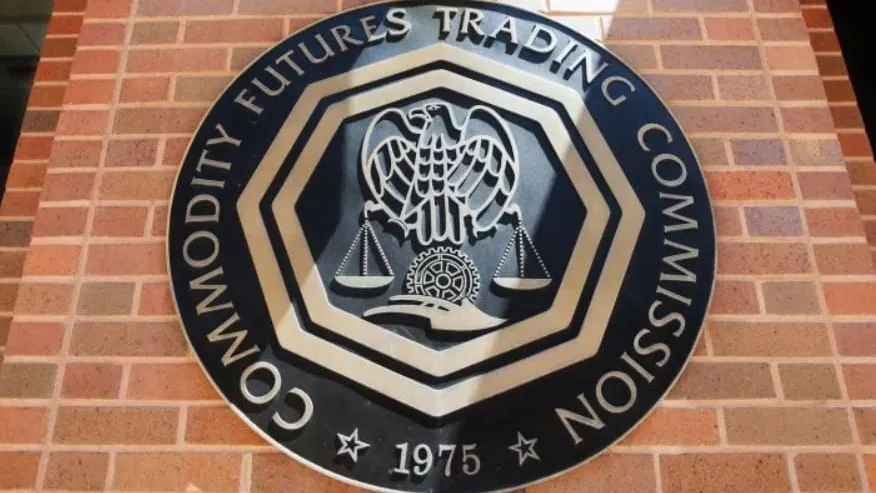
The contract ending lands during an active legal dispute over whether event contracts fall under federal or state law. Kalshi argues that contracts listed on federally regulated exchanges are within the Commodity Futures Trading Commission's jurisdiction, while state authorities have challenged products they consider unlicensed gambling. On July 27, a Minnesota federal court, with U.S. District Judge Katherine Menendez granting preliminary relief, blocked enforcement of the state's new prediction market statute against CFTC-registered exchanges while related lawsuits proceed. The court found the plaintiffs likely to succeed on at least part of their argument that federal law displaces the state statute. That ruling addressed only preliminary relief.
Separately, the CFTC issued a September 22 advisory warning that contracts settled by whether named individuals say certain words, attend events, or interact with others carry heightened manipulation risk, because payouts depend on conduct that may be hard to verify independently. Exchanges must provide contract-specific analysis and meet requirements for listing products not readily susceptible to manipulation. On Capitol Hill, Senator Elizabeth Warren has pledged to crack down on insider trading involving prediction market platforms.
What It Signals
The departure is a clear example of how political connections and investor relationships now intersect with contested regulatory territory in prediction markets. Both companies framed the split as amicable, and neither has disclosed further terms. The open questions are the status of Trump Jr.'s equity, how the Minnesota litigation resolves on the merits, and whether the CFTC's manipulation concerns translate into rulemaking.
Why It Matters
For Traders
Prediction market venues face active jurisdictional litigation, so contract availability and terms could shift quickly depending on court rulings.
For Investors
Competing funding of Kalshi and Polymarket signals that political ties and regulatory outcomes are becoming material to the sector's valuations.
For Builders
Exchanges listing event contracts must now supply contract-specific manipulation analysis, so product design should anticipate CFTC scrutiny of verifiability.
This article is for information only and is not financial advice. Read the full disclaimer.