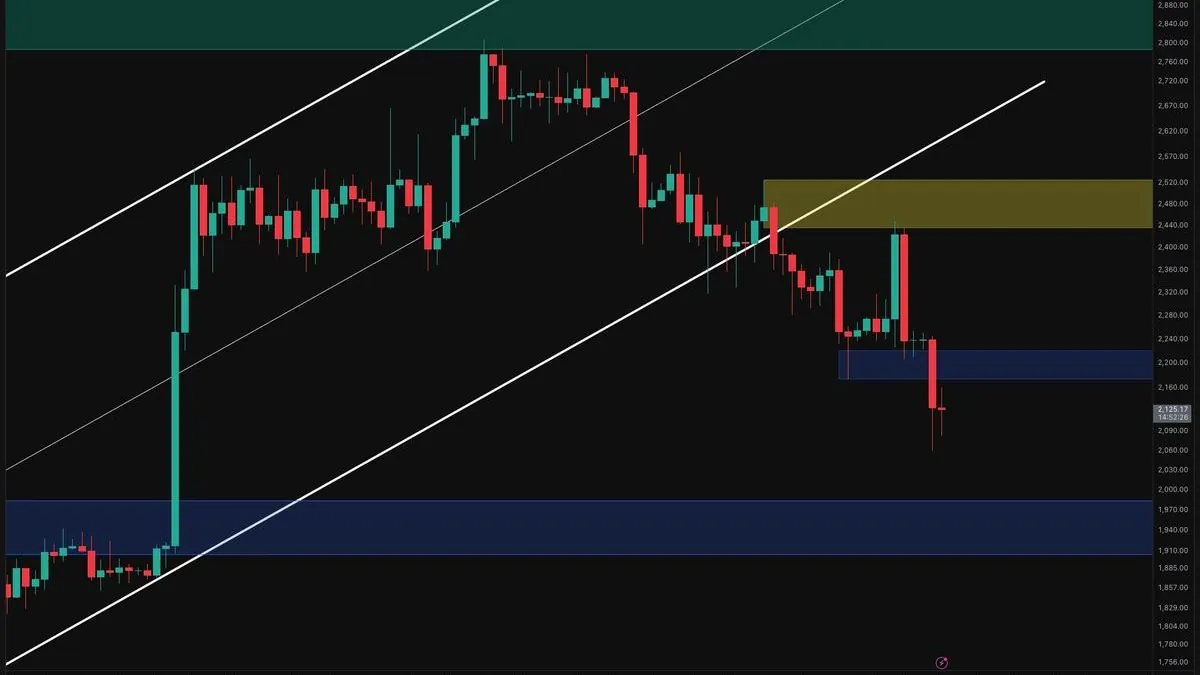
MSCI Removes Strategy From Equity Indexes, Raising Bitcoin Buying Concerns
MSCI confirmed that Strategy, the bitcoin treasury company led by Michael Saylor, will be removed from its equity indexes after the November 30 market close. Analysts say the exclusion could pressure Strategy's shares and weaken its ability to fund further bitcoin purchases.
Written by CoinArticle’s AI Newsroom · from 2 cited sources. How we work
What MSCI Announced
MSCI confirmed on November 11 that Strategy will be removed from its equity indexes, along with Japan's Metaplanet and UK-based uranium investor Yellow Cake, according to Reuters. The changes take effect after the November 30 market close. The removals follow MSCI's October decision to exclude companies whose financial profiles resemble investment funds rather than conventional operating businesses.
Under the revised rules, MSCI first checks whether a company has substantial operating assets, then applies five financial ratio tests. A company that fails the initial assessment and triggers at least four of the five ratios becomes ineligible. Existing index members must fail the screen across their two most recent annual filing periods before they are removed.
Size of the Potential Selling
The estimates of forced selling differ across sources. Strategy has said that funds tracking the relevant MSCI indexes hold about 13 million MSTR shares, or 3.1% of its basic shares outstanding, worth roughly $1.57 billion at Tuesday's closing price. JPMorgan has estimated outflows of as much as $2.8 billion from the exclusion, and has warned that selling could reach $8.8 billion if other major index providers adopt similar restrictions. The sources do not reconcile these figures, and the eventual outflow will depend on how passive funds and other investors act before the deadline. Strategy shares fell about 2.5% in extended trading after the announcement, per Reuters.
Impact on Bitcoin Accumulation
The immediate pressure falls on Strategy's equity, not on the bitcoin it holds. The concern is the funding model. Strategy has regularly issued common and preferred shares to raise capital for bitcoin purchases, so a sustained decline in MSTR could make new equity raises less attractive and limit how much it can add. Some analysts say the exclusion could hamper that buying capacity, though the reporting does not quantify how much this would slow purchases.
The company has kept buying. Its latest purchase was 1,036 BTC for $81.9 million between November 2 and November 8, bringing holdings to 850,364 BTC. That buy and a separate $188.3 million repurchase of STRC preferred shares were funded through common stock sales. Strategy also paused purchases for two consecutive weeks in September while repurchasing $139.3 million of preferred shares, a precedent that suggests further pauses are possible if equity capital becomes more expensive to raise.
Broader Market Backdrop
The index news arrives during weak demand for bitcoin. The cryptocurrency has struggled to hold above $75,000. US spot bitcoin ETFs recorded about $1.28 billion in net withdrawals during the first week of November, followed by a further $201 million on November 9, reducing a major source of institutional demand.
Why It Matters
For Traders
Passive index selling into the November 30 close could pressure MSTR in the coming weeks, and the size of that selling is still uncertain.
For Investors
Index exclusion may constrain Strategy's equity-funded bitcoin accumulation, a key structural driver of its treasury model over the coming months.
For Builders
Index providers tightening eligibility for treasury-style companies changes how bitcoin-exposed equities are screened, so products tracking them should review their index inputs.
This article is for information only and is not financial advice. Read the full disclaimer.