Paraguay's Ueno Bank Collapse Leads to President Peña's Resignation
Paraguayan President Santiago Peña announced his resignation after the central bank placed digital lender Ueno Bank into resolution, freezing accounts for roughly three million customers. Lawmakers voted 78-0 to impeach him minutes later, and the central bank has announced a deposit guarantee of up to 228.3 million guaraníes, about $36,000, per depositor.
Written by CoinArticle’s AI Newsroom · from 2 cited sources. How we work
The Collapse and the Freeze
Paraguay's central bank placed Ueno Bank into resolution on November 3 after finding its solvency ratio had fallen below half the legal minimum. Accounting adjustments to the bank's financial statements preceded the decision, and the app, cards and transfers went out of service.
Ueno claimed about 2.9 million customers, more than 60% of Paraguay's adults. According to AP, it also held roughly $800 million in public-sector deposits, including pension and health funds, which complicates the freeze on ordinary savings and wages.
Political Fallout
President Santiago Peña announced his resignation Thursday. Minutes later, the lower house voted 78-0 to impeach him and sent the charges to the Senate, while Vice President Pedro Alliana prepared to take over, per AP.
Peña previously held a stake in a company linked to Ueno's owners, which fueled allegations of conflicts of interest. He has denied wrongdoing and said he sold that interest in March 2025, according to Reuters. In his resignation address he said his greatest wish was that the funds be returned and that the Deposit Guarantee Fund, Paraguay's equivalent of the FDIC, fulfill its purpose.
Protests outside Congress were heated. Protester Luis Pineda told AP that Peña and the Colorado Party had "stolen all our savings."
Official Response and Guarantees
The central bank describes Ueno's failure as an isolated case rather than a sign of a wider banking collapse. It has set a deposit guarantee of up to 228.3 million guaraníes per depositor, roughly $36,000. Initial payments target eligible accounts holding no more than 10 million guaraníes with no Ueno debts and an account at another institution.
The Bitcoin Debate
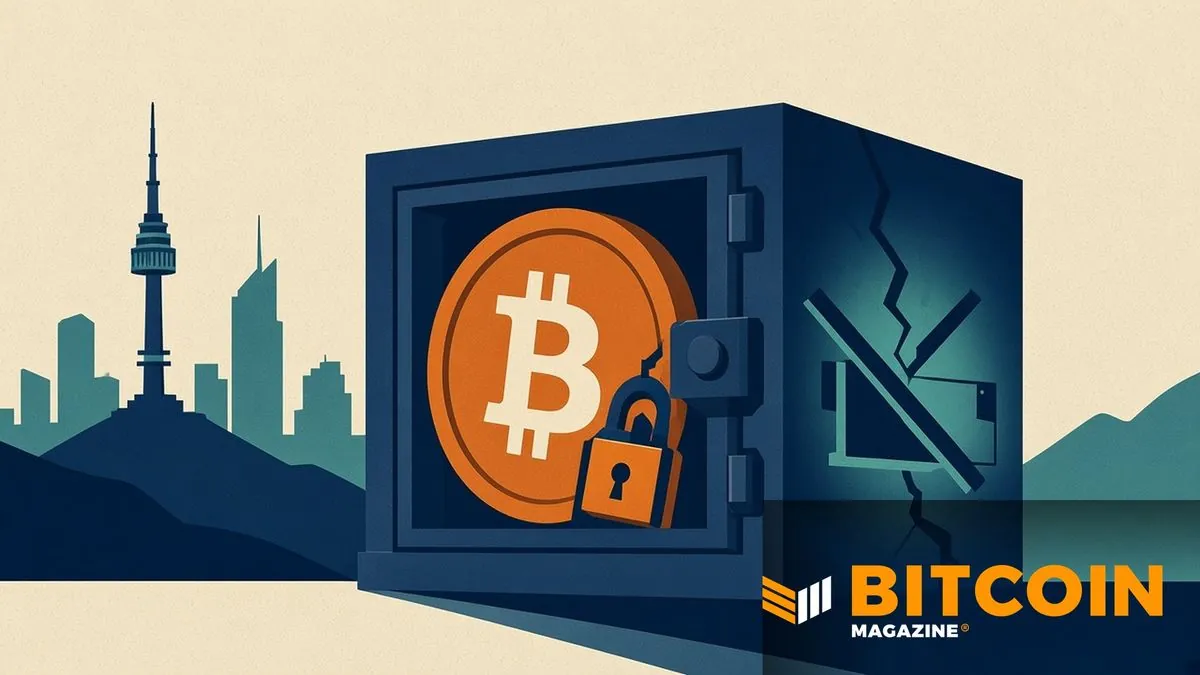
The episode has revived an argument familiar to Bitcoin holders: money held by an intermediary is only as accessible as that institution allows. Decrypt notes that a holder who controls a wallet's private keys can authorize transfers without a bank unlocking the account, the principle behind the phrase "not your keys, not your coins." The same reporting cautions that self-custody carries its own risk. Lost keys cannot be recovered, and no agency can intervene.
Reports differ on the framing. Decrypt presents the episode as a direct illustration of the self-custody case, while Bitcoinist's summary highlights the criminal investigations and public protests as the crisis's defining features. Neither source offers evidence that Ueno's customers were exposed to Bitcoin or crypto assets.
Why It Matters
For Traders
Bitcoin's price is unlikely to move on this event alone, but watch for any stablecoin or exchange flows tied to Paraguayan users over the next several days.
For Investors
The episode strengthens the case for self-custody as a narrative in emerging markets, though its effect on adoption depends on how the deposit guarantee is executed.
For Builders
Wallet and payment teams serving Latin American users should expect rising demand for self-custody and fiat on-ramp reliability when local banks freeze.
This article is for information only and is not financial advice. Read the full disclaimer.