Tron, Tether and Chainalysis Launch Digital Crime Task Force Against USDT Scams
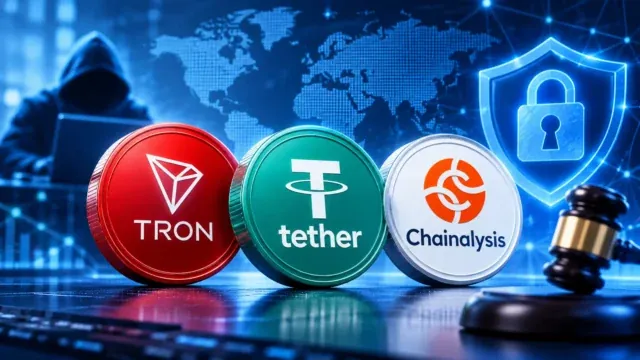
Tron, Tether and blockchain analytics firm Chainalysis launched the Digital Crime Task Force on November 12 to track illicit USDT activity on the Tron network and help freeze stolen funds. The group succeeds the T3 Financial Crime Unit, which Bloomberg reported had been disbanded in August amid slow response times and weak coordination.
Written by CoinArticle’s AI Newsroom · from 3 cited sources. How we work
Story Updates
- Updated Nov 12, 2026, 04:39 PM: Decrypt adds Binance's T3 membership, the $6.4 billion Binance hack timing, and Chainalysis's ICE contract lawsuit against TRM Labs.
What Was Announced
Tron, Tether and Chainalysis launched the Digital Crime Task Force (DCTF) on November 12, according to the companies' joint statement. The initiative targets suspicious activity involving Tether's USDT stablecoin on the Tron blockchain. Its stated aims are identifying criminal wallets, sharing intelligence with law enforcement and stopping funds from moving before investigators can recover them.
The three companies play distinct roles. Chainalysis supplies blockchain tracing and investigation tools, Tron operates the network on which much USDT volume settles, and Tether, as issuer, can freeze tokens held at flagged addresses. Tron founder Justin Sun said the partnership would protect people who rely on USDT for payments, writing that "millions of people rely on USDT on Tron to support their families." Tether CEO Paolo Ardoino said the company has frozen more than $7 billion tied to illicit activity and works with more than 360 law enforcement agencies across 73 countries.
The task force plans to proactively trace criminal networks rather than wait for victim reports or investigator flags, and it will accept tips and freeze requests from police. Its target list spans romance and investment scams, stolen funds, terrorist financing, North Korean cyber operations, cartel money laundering and child-exploitation material. The group also cited the coming use of autonomous AI agents transacting onchain as a source of new exploitation risk. The companies have not yet announced specific asset freezes or completed enforcement cases attributed to the task force.
Predecessor Partnership and Its Reported Collapse
The DCTF succeeds the T3 Financial Crime Unit, which Tron and Tether formed in September 2024 with blockchain analytics firm TRM Labs and which Binance later joined. Together the group reported freezing more than $450 million in illicit assets while cooperating with authorities across 23 jurisdictions.
Bloomberg reported on November 4 that T3 was dissolved in late August after problems with slow responses and coordination among members. Tron later confirmed the program had concluded, and has framed the change as a shift in participants. A Tether spokesperson said the company will keep working with TRM Labs through other channels, including the Beacon Network, which supports information sharing between companies and authorities. The available reporting does not establish whether coordination failures were the decisive cause.
The replacement of TRM Labs with Chainalysis is notable because the two firms compete directly. Chainalysis has sued the U.S. government over an ICE contract awarded to TRM Labs without competitive bidding, a dispute that underscores rivalry in crypto's crime-fighting infrastructure. Tether and Chainalysis had already worked together, launching a USDT transaction monitoring service in May 2024.
Threat Context and Chainalysis Research
The task force's framing draws on Chainalysis research on criminal use of artificial intelligence. In its 2026 Crypto Crime Report, the firm estimated that AI-enabled scams generated 4.5 times more revenue per operation than scams without identified AI links. That figure is Chainalysis's own estimate.
USDT circulates on Tron in volumes exceeding $94 billion, according to the reporting, which makes the network's monitoring arrangements a material question for stablecoin users. How quickly the new group converts its stated proactive model into actual freezes remains to be seen.
Why It Matters
For Traders
USDT flows on Tron may face faster freezes if the task force moves quickly, but no enforcement actions have been announced yet, so near-term effects remain unproven.
For Investors
The collapse of the earlier T3 unit and the shift to a new partner signal that industry-led crime enforcement is still maturing, which bears on Tether's regulatory posture.
For Builders
Teams integrating USDT on Tron should expect tighter monitoring and possible freezes, and should review their compliance tooling against Chainalysis's data sources.
This article is for information only and is not financial advice. Read the full disclaimer.