Meta Begins USDC Creator Payouts in Colombia and the Philippines
Meta announced on April 29 that eligible creators in Colombia and the Philippines can receive payouts in USDC through compatible wallets on Solana and Polygon, with Stripe handling the infrastructure. Analysts estimate that if 10% of creator payments moved to stablecoins, the flow would be $25 billion to $48 billion annually, though that figure rests on modeling rather than disclosed Meta data.
Written by CoinArticle’s AI Newsroom · from 2 cited sources. How we work
What Meta Announced
Meta said on April 29 that it will pay eligible creators in USDC through compatible crypto wallets on Solana and Polygon. The initial rollout is limited to selected creators in Colombia and the Philippines, and recipients must connect a compatible wallet to receive funds directly from Meta's creator payout system. Meta has not disclosed the number of creators enrolled or the volume of payments routed this way.
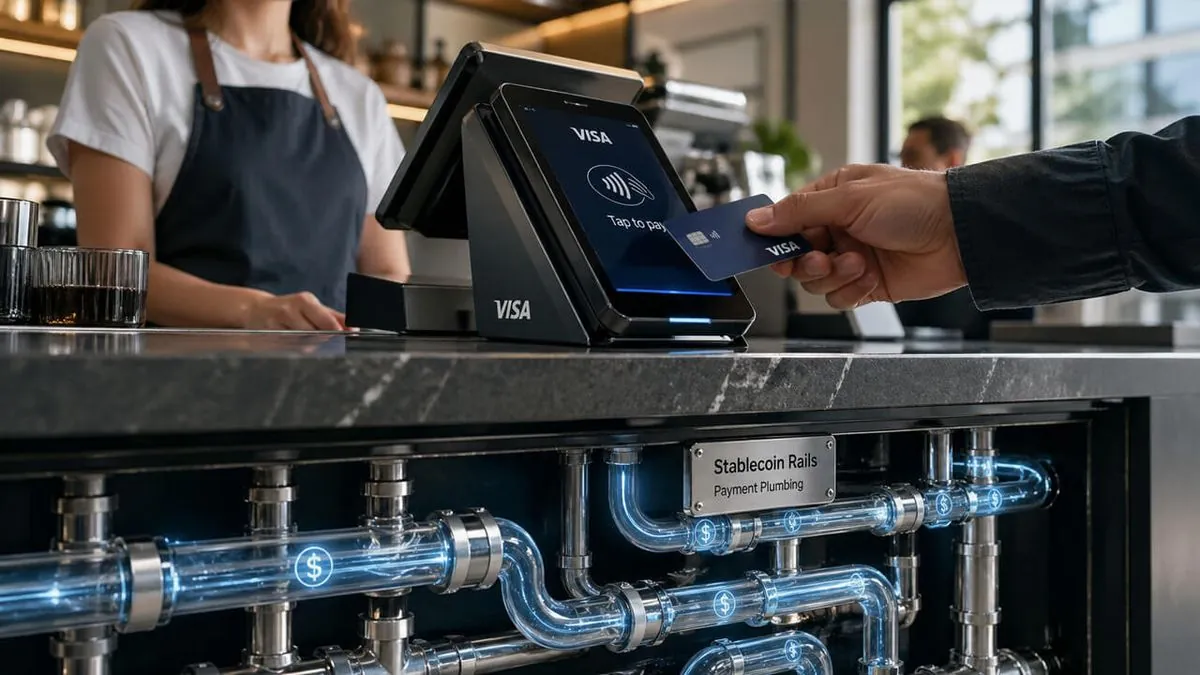
The pilot is built on infrastructure Stripe has spent years developing. Stripe now markets USDC payouts on networks including Solana and Polygon, with KYC and AML onboarding and coverage in more than 60 countries. The company says stablecoin cross-border payments settle in minutes and that businesses in 101 countries not previously supported by Stripe Treasury can now hold dollar-denominated balances.
Sizing the Opportunity
CryptoSlate's analysis puts the addressable flow in concrete terms. Goldman Sachs estimated the creator economy at roughly $250 billion in 2023, projecting it could reach $480 billion by 2027 across about 50 million creators. Goldman also found brand deals make up about 70% of creator revenue. Applying a 10% stablecoin share yields $25 billion a year today, or about $2.1 billion a month, rising to $48 billion annually by 2027.
These are scenario figures, not forecasts from Meta or Stripe, and the 10% penetration rate is an assumption. For comparison, the Bank for International Settlements reported payment-related stablecoin flows of roughly $390 billion in 2025, separate from the $35 trillion in total on-chain stablecoin volume, most of which is trading and settlement. On that basis, the scenario range would equal between 6.4% and 12.3% of current real-economy stablecoin payments.
Why These Markets
Both Colombia and the Philippines combine sizable creator populations with friction in cross-border payouts, and both have demonstrated demand for dollar-denominated savings. A USDC payout can reach a creator in Manila or Bogota faster than a traditional wire while settling in dollars. Because roughly 98% of stablecoins are dollar-denominated, broader adoption of this model would route more platform income through dollar rails, a dynamic the BIS has framed as a macro question.
Friction and Caveats
The user experience is the main constraint. Meta's help documentation walks creators through wallet compatibility, network selection, and security steps, which is a long way from the typical brand-deal creator's experience. Stripe itself warns that assets sent over incompatible chains can be lost without recourse, and that low headline transaction costs can rise once on-ramps, off-ramps, compliance checks, and local currency conversion are included.
Historical Context
Meta's position is a reversal of its earlier attempt at a native currency. Libra launched in 2019, was rebranded as Diem, and in 2022 its blockchain assets were sold to Silvergate Bank after regulators objected and bank partners withdrew. The current pilot relies on existing USDC issuance and third-party payment infrastructure rather than a Meta-issued token, a structure that avoids the issuance question that sank the earlier project.
Why It Matters
For Traders
The pilot is limited to two markets with no disclosed volume, so near-term USDC demand effects are unlikely to be measurable from payout data alone.
For Investors
If creator payouts scale, stablecoins could take a structurally larger share of real-economy payment flows, supporting a longer-run case for payments-focused stablecoin usage.
For Builders
Platforms integrating stablecoin payouts must handle chain selection, wallet compatibility, and irreversible errors, making user-facing guardrails a core part of the integration.
This article is for information only and is not financial advice. Read the full disclaimer.